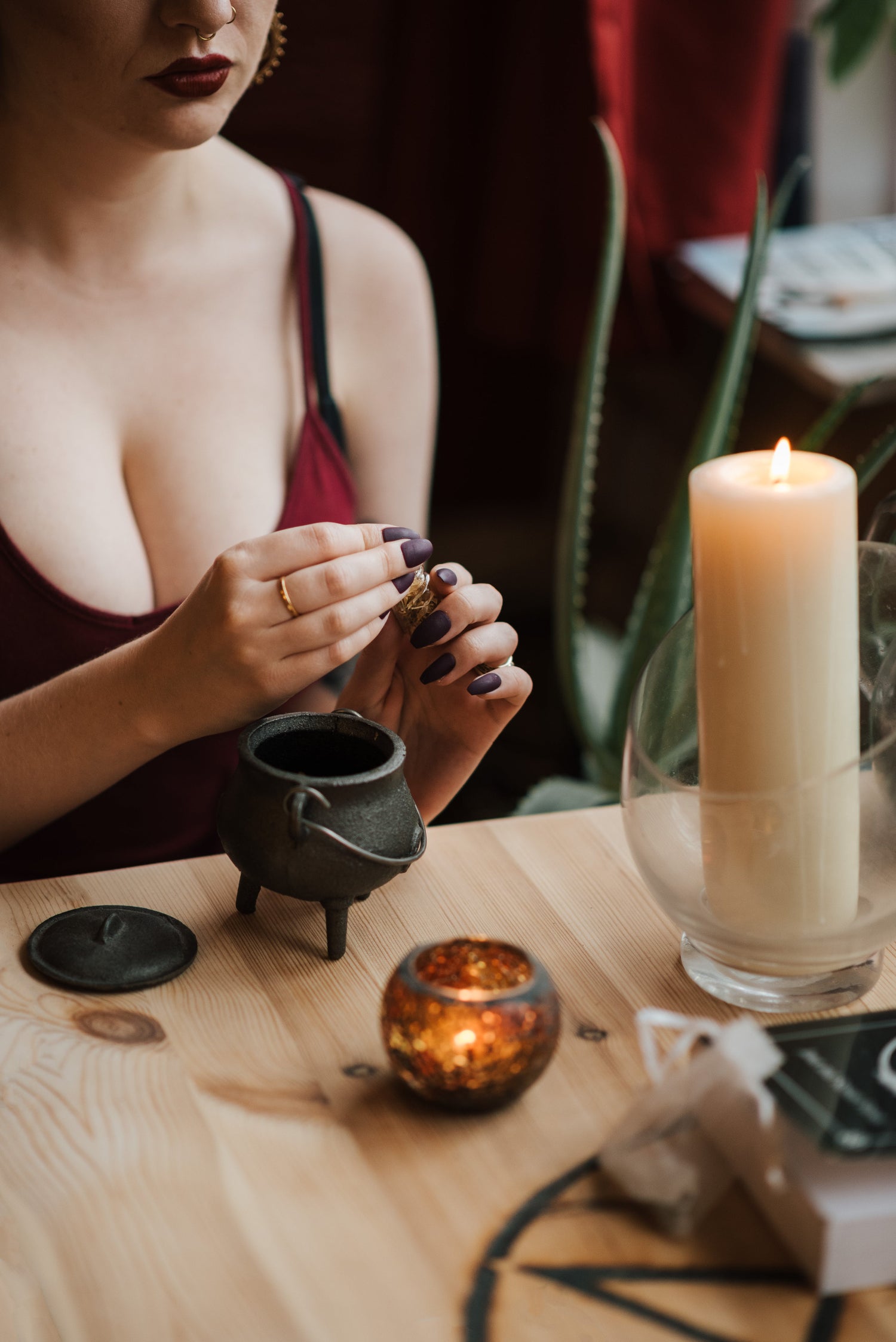


There’s something timeless about the image of a witch at her cauldron—steam curling up into moonlight, the scent of herbs in the air, a quiet hum of intent. Potion-making is one of the oldest forms of witchcraft, blending the practical art of herbalism with the spiritual act of enchantment. Whether you’re crafting a tea to soothe the heart, a spray for cleansing, or an oil for prosperity, potion craft connects you directly to the elemental forces of Earth and Water—the realms of nourishment, emotion, and transformation.
The Heart of Potion Craft
In magical practice, a potion is any liquid infused with intention. It may be physical (like a tea or bath) or symbolic (like a ritual spray or anointing oil). Historically, witches, cunning folk, and herbalists prepared brews to heal, bless, or banish. From medieval European herb-wives to Appalachian granny magic, these mixtures were rarely just “spells in a bottle”—they were acts of relationship with the land and its spirits.
Modern witches continue that legacy with respect for both safety and spirit. When we brew, we don’t just mix ingredients—we awaken them. Each plant, stone, and drop of oil carries an energetic signature that supports our intention.
Basic Potion Crafting Principles
1. Start with intention.
Before reaching for the herbs, decide your purpose. Protection? Clarity? Self-love? Every choice flows from this.
2. Choose correspondences wisely.
Select herbs, oils, and waters that align with your goal. For example:
- Rose for love and compassion
- Peppermint for energy and focus
- Lavender for peace and protection
- Mugwort for intuition and dreamwork
Use references like Cunningham’s Encyclopedia of Magical Herbs or Scottish Herbal Magic by Ellen Evert Hopman for traditional correspondences.
3. Work with elemental balance.
Water carries your intention; herbs and oils embody the Earth; heat (when brewing tea or simmering) brings Fire; air or steam carries the scent to the unseen. Recognizing these elements adds depth to your craft.
4. Craft with cleanliness and reverence.
Wash your tools, set your space, and approach your work as a sacred act.
Simple, Safe Potion Recipes
Here are a few beginner-friendly brews that can be made with herbs commonly found in your kitchen—or your witch’s garden.
Calming Moon Tea
For grounding, reflection, and emotional release.
- 1 tsp chamomile
- 1 tsp lavender
- 1 tsp lemon balm
- Optional: a pinch of mugwort for lunar connection (use sparingly)
Steep in freshly boiled water for 5–7 minutes. Stir clockwise while focusing on your intention for calm and clarity. Drink under moonlight or before meditation.
Self-Love Bath Potion
For compassion and emotional renewal.
- 1 cup Epsom salt
- 1 tbsp rose petals
- 1 tsp dried orange peel
- 5 drops rose or geranium essential oil
Mix in a jar, shake gently while saying: “I am worthy, I am whole.” Add to bathwater and soak as long as you need.
Protection Room Spray
For cleansing and energetic defense.
- 1 cup distilled water or witch hazel
- 10 drops rosemary oil
- 10 drops clove oil
- 10 drops cedarwood oil
- Optional: a black tourmaline chip or piece of obsidian
Combine in a glass spray bottle, shake well, and spritz while envisioning a bright light sealing your space.
Tools of the Potion Crafter
Your workspace doesn’t need to look like an apothecary—but having dedicated tools helps keep your magic clear and intentional.
From Thrice Round, look for:
- Glass jars and apothecary bottles for storage and display
- Corked vials for spell oils or small brews
- Mortar and pestle sets for grinding herbs
- Ritual spoons or stirrers for potion blending
- Herbal bundles and dried herbs for spell correspondences
- Labels or parchment tags to note your potion’s purpose and date
These items don’t just look beautiful—they connect you to a long lineage of magical herbalists who honored both form and function in their craft.
A Word on Safety
Not all herbs are safe for ingestion, and essential oils should never be consumed unless specifically formulated for that purpose. When in doubt, keep your magical brews external—like sprays, oils, or baths—and always research your ingredients using reputable herbal sources (such as the Herbal Academy or Henriette’s Herbal Homepage).
Closing the Circle
Potion-making reminds us that magic is sensory—it smells, steams, bubbles, and cools. It’s hands-on, heart-centered, and deeply personal. When you craft a potion, you’re blending more than ingredients—you’re stirring your own intention into the world.
Whether your brew sits on a sunny windowsill or simmers gently by candlelight, what matters most is your energy. Every bubble that rises carries your magic with it.
So, take your time. Breathe. Stir clockwise for manifestation, counterclockwise for release. And when your potion is ready—sip, soak, or spritz with intention. The witch’s cauldron, after all, is just another word for the heart.