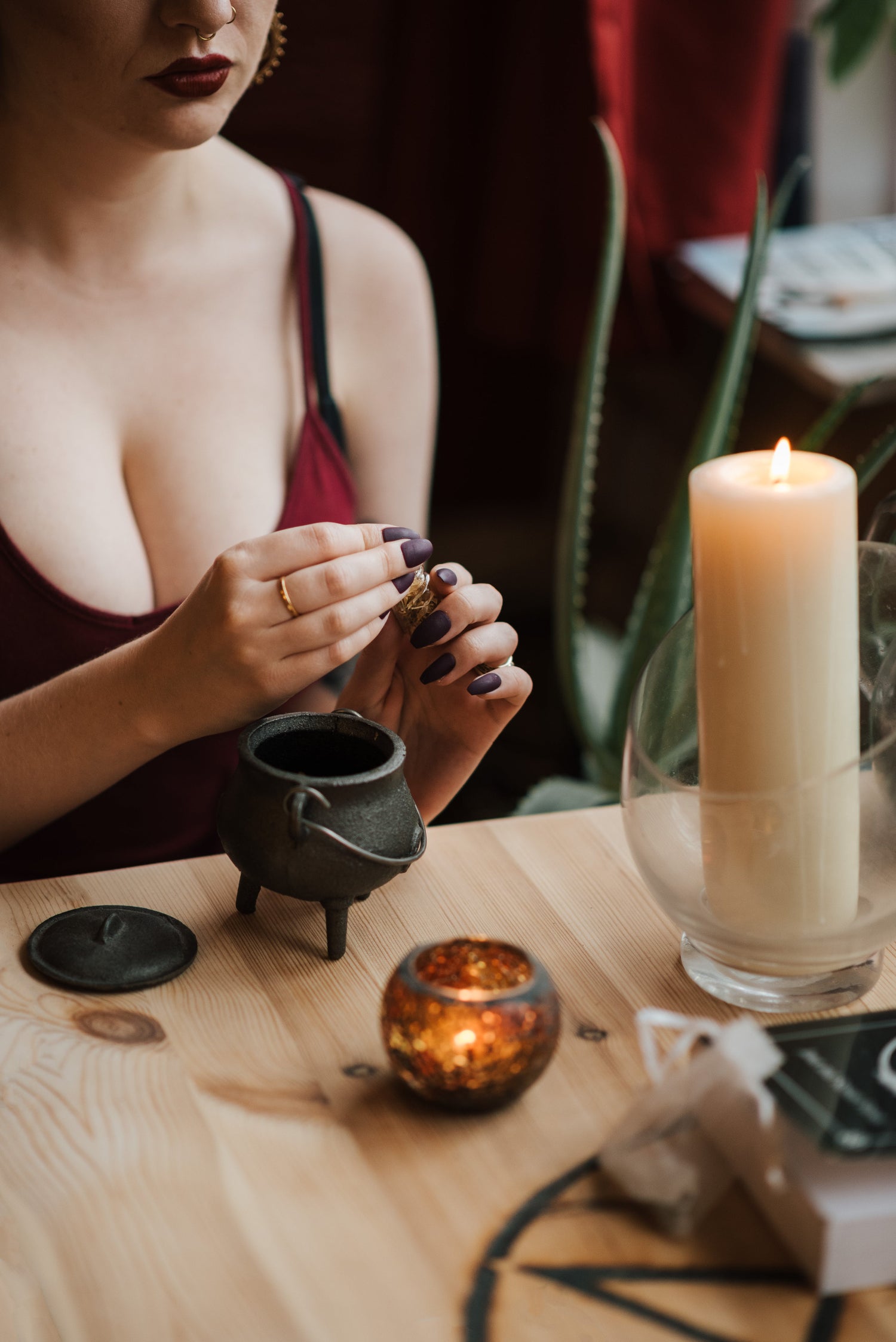


When the cold still lingers and the land seems asleep, there comes a quiet stirring—a whisper of renewal beneath the frost. That’s Imbolc, the festival of first light and new beginnings. It sits halfway between Yule (Winter Solstice) and Ostara (Spring Equinox), marking the first subtle shift from winter’s stillness toward the promise of growth.
For modern witches and pagans, Imbolc is both an agricultural and spiritual threshold: the celebration of the returning sun, the purification of home and hearth, and the first signs of fertility stirring within the earth.
Ancient Origins: From Herding Season to Holy Day
The word Imbolc (pronounced IM-olk or IM-bolg) likely comes from Old Irish i mbolg, meaning “in the belly.” It refers to ewes’ pregnancy—when lambs begin to quicken in the womb and milk returns, a sign that spring was on its way.
Earliest references appear in medieval Irish literature, notably in the Tochmarc Emire (The Wooing of Emer), where Imbolc is listed among the four great Celtic fire festivals: Samhain, Imbolc, Beltane, and Lughnasadh. ([MacKillop, 1998, Dictionary of Celtic Mythology])
In pre-Christian Celtic societies, Imbolc likely marked the time for agricultural preparation, cleansing tools, and blessing livestock. It’s thought to have been associated with Brigid—a goddess of poetry, healing, smithcraft, and fertility—whose sacred fires burned in Kildare, Ireland.
When Christianity spread through Celtic regions, Brigid was syncretized as Saint Brigid of Kildare, whose feast day (February 1st) aligns with Imbolc. Her traditions—keeping a perpetual flame, blessing wells, and weaving her distinctive crosses—continued under a Christian guise but retained deep pagan roots. ([Ó Duinn, The Rites of Brigid, 2005])
Imbolc in the Wheel of the Year
In modern witchcraft and neopagan practice (particularly Wicca and Celtic-inspired paths), Imbolc represents:
- Purification and renewal (after winter’s long stillness)
- Light returning (candles, the young sun, and hearth fires)
- Inspiration (creative energy awakening with Brigid’s blessings)
- Domestic magick (cleansing, organization, preparation for new projects)
Ronald Hutton, in The Stations of the Sun (1996), notes that many Imbolc customs survive in rural folklore—such as weather divination, hearth blessing, and candle processions. In some Scottish and Irish traditions, people still make Brigid’s crosses from rushes or straw, and create Brídeog dolls, representing the goddess visiting each home for blessing.
Modern pagans continue these customs as acts of devotion or as seasonal markers of spiritual and physical renewal.
How Modern Witches Celebrate Imbolc
While each practitioner’s observance is unique, here are some historically rooted and modern-adapted practices:
1. Candlelight & Fire Rituals
Imbolc is often called Candlemas in Christian calendars—a natural overlap with Brigid’s association with flame.
- Light candles throughout your home to welcome returning light.
- Dedicate one as your “Brigid’s flame,” symbolizing creativity and inspiration.
- Use natural wax or handmade candles from your altar shop to tie into tradition.
Shop idea: Thrice Round’s Fire Blessing Ritual Kit or a simple Imbolc Altar Candle
2. Cleansing & Blessing the Home
Just as spring cleaning readies the home for new life, Imbolc is a spiritual purification.
- Sweep or asperge (sprinkle water/herb infusion) around your space.
- Burn purifying herbs like rosemary, bay, or juniper.
- Craft a small bowl of blessed salt water and anoint doorways for protection.
Shop idea: Blessing Bowl for home rituals.
3. Honoring Brigid
Whether you view Brigid as goddess, saint, or archetype, her symbols connect you to centuries of devotion.
- Create a Brigid’s cross from straw or reeds.
- Place a small cloth (“Brat Bríde”) outside on Imbolc Eve to receive her blessing overnight.
- Offer milk, bread, or honey on your altar.
Shop idea: Brigid Altar or Wall Plaque
4. Divination & Creativity
Brigid’s domain includes poetry and inspiration—so Imbolc is an ideal time for journaling, writing spells, or divination for the year ahead.
- Pull tarot or oracle cards focused on renewal.
- Scry by candlelight to glimpse what seeds will sprout in your life.
- Begin crafting or artistic projects blessed under Brigid’s light.
Symbols & Correspondences
| Element | Correspondence |
|---|---|
| Colors | White, gold, green, pale yellow |
| Herbs | Basil, rosemary, angelica, bay, chamomile |
| Crystals | Citrine, garnet, sunstone, amethyst |
| Deities | Brigid, Vesta, Hestia |
| Tools | Candles, besom (broom), offering bowl, seeds |
Reflection: Imbolc in a Modern World
In the 2020s, many pagans and witches have embraced slow, seasonal living—a return to the rhythms of the earth even in urban life. Social media movements like #Cottagecore and #Witchtok have re-popularized simple Imbolc acts: baking seed bread, blessing houseplants, or lighting a single candle in gratitude for the returning sun.
Even science affirms this turning point—astronomically, Imbolc coincides with the sun crossing the midpoint between solstice and equinox, a measurable shift in light and energy.
No matter how disconnected we may feel from the land, Imbolc invites us back into rhythm.
A Simple Imbolc Ritual
- Cleanse your space with incense or water infused with rosemary.
- Light a single white candle. Say:
-
“From darkness I call the light.
From stillness I call the seed to life.” - Reflect on what you wish to grow this year—within and without.
- Write your intentions on small slips of paper and bury them in soil or a potted plant.
- Offer thanks to Brigid or the returning sun with milk or bread.
It’s simple, heartfelt, and in line with both historical and modern practice.
Closing Thoughts
Imbolc reminds us that even in the coldest months, the promise of life remains. The land may still rest, but the sun has turned its face toward us again.
In lighting your candle, you’re joining a lineage that stretches back thousands of years—from Celtic herders tending their flocks, to nuns guarding Brigid’s sacred flame, to modern witches crafting light in the dark of February.
May your hearth be blessed, your spirit inspired, and your path bright with new beginnings.
Blessed Imbolc.