

As summer’s warmth fades and autumn’s gold begins to spread across the land, pagans and witches turn the Wheel of the Year once again — this time to Mabon, the Autumn Equinox. Celebrated around September 21st–23rd in the Northern Hemisphere, Mabon marks the moment of balance when day and night are equal, before the darkness slowly takes hold.
It is the second harvest, following Lughnasadh and preceding Samhain — a time to gather not only crops but also wisdom, gratitude, and reflection.
The Origins of Mabon
The term Mabon is relatively modern, popularized in the 1970s by Wiccan author Aidan Kelly, who borrowed it from Mabon ap Modron, a figure in Welsh mythology meaning “Son of the Mother.” Historically, the equinox was celebrated in various agrarian and pagan cultures, though not necessarily under this name.
- In ancient Britain, the equinox was a festival of thanksgiving, when communities honored the earth’s bounty before preparing for winter.
- The Greeks honored Demeter and Persephone, reflecting on descent and return — light fading into darkness and rebirth.
- The Romans celebrated Pomona, goddess of fruits and orchards.
- In Celtic lands, the harvest was dedicated to the gods of the land, grain, and fertility, continuing the gratitude begun at Lughnasadh.
Though the word Mabon is new, the festival’s themes of balance, gratitude, and letting go are ancient.
Symbolism and Themes
Mabon embodies equilibrium — the perfect midpoint between abundance and decline. The light and dark stand as equals, reminding us that balance is temporary, a sacred pause before transformation.
Themes: Balance • Gratitude • Reflection • Preparation • Release
Colors: Burnt orange, burgundy, gold, deep green, brown
Symbols: Apples, grapes, pumpkins, corn, acorns, wine, scales
Deities often honored: Demeter, Persephone, Mabon ap Modron, Modron, Dionysus, Inanna, the Green Man
In many mythic cycles, this is the time when the God of the Harvest sacrifices himself, echoing the cutting of the grain. His death ensures the earth’s renewal — a potent symbol of the cycle of life, death, and rebirth.
Ways to Celebrate Mabon
Modern pagans and witches honor Mabon through acts of gratitude, reflection, and balance — giving thanks for what the year has brought and preparing to release what must now fall away.
Here are a few meaningful ways to celebrate:
- Feast of the Harvest: Prepare seasonal foods — roasted squash, apples, bread, and wine — and share with loved ones.
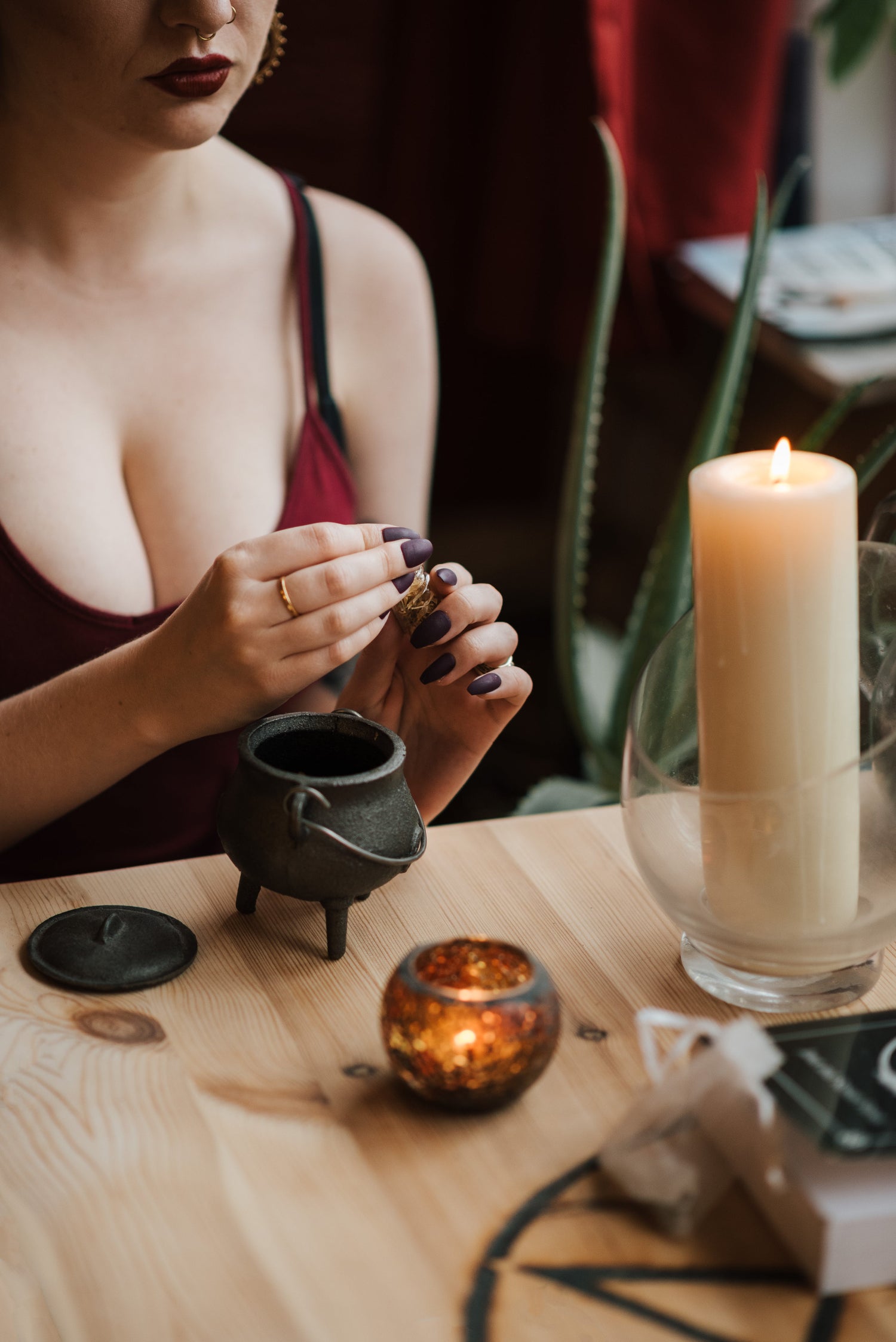
- Decorate Your Altar: Use autumn leaves, acorns, apples, and candles in gold and brown tones.
- Give Back: Donate food or time to community efforts. Mabon is a harvest festival; generosity is part of its spirit.
- Balance Ritual: Write two lists — one of what you’ve gained and one of what you’re ready to release. Burn or bury the latter as an offering of gratitude and closure.
- Divination: Use tarot or runes to reflect on the lessons of the past season and prepare for what’s coming as the veil begins to thin toward Samhain.
Magical Workings for Mabon
Because Mabon is about harvest and harmony, it’s ideal for magic that centers around:
- Thanksgiving and abundance
- Balancing energies (light/dark, work/rest, giving/receiving)
- Protection for the coming darker months
- Releasing negativity or emotional clutter
- Home and hearth blessings
Magical correspondences for Mabon include:
Crystals: Smoky quartz, citrine, amber, peridot, hematite
Herbs: Sage, rosemary, apple leaf, oak, grapevine, cinnamon
Incense: Myrrh, frankincense, or apple spice
A simple spell for balance:
Light two candles — one gold (for light) and one black (for darkness).
Sit quietly between them, breathing evenly.
Say aloud:
“As light and shadow intertwine,
So may balance dwell in me and mine.”
Let the candles burn together for a few minutes before extinguishing both.
A Modern Reflection
For today’s witch, Mabon is less about the literal harvest and more about inner balance — between outer action and inner stillness, between gratitude for what is and acceptance of what fades.
In a time when life moves quickly, Mabon invites us to slow down and take stock, to breathe and honor the turning of the seasons within ourselves.
Modern pagan writers like Ronald Hutton (The Stations of the Sun, 1996) and Glennie Kindred (Sacred Earth Celebrations, 2010) note that the equinox represents both cosmic order and personal equilibrium. By observing it, we align our rhythms with nature’s — a small act of magic in itself.
Closing Blessing
“May your harvest be rich, your heart be light,
As day and night embrace tonight.
In balance and in gratitude stand,
Between the dark and sunlit land.”